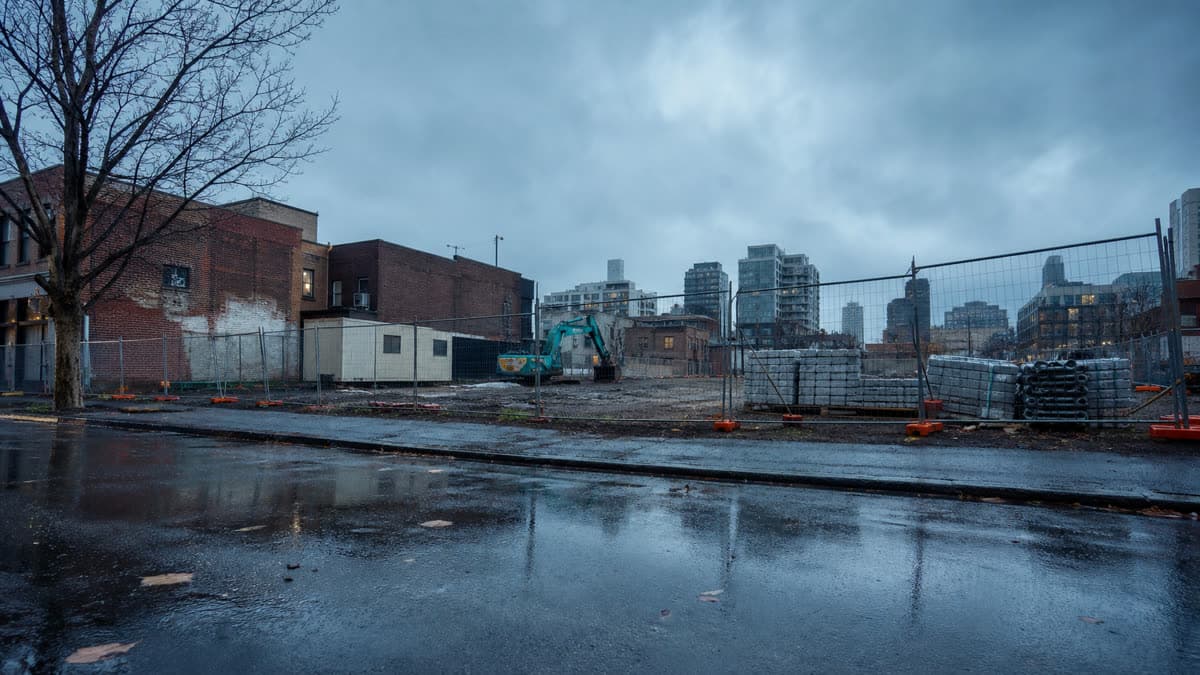
 Photo: SiteLogic editorial image
Holding Costs
The holding cost stack: what really carries a Victorian site
Interest, land tax, vacant residential land tax, council rates and insurance all accrue while a Victorian site sits pre-construction. How to break the holding cost stack into its components before it erodes a feasibility.
Every month a site sits between settlement and the start of construction, it costs money to hold, and that cost rarely gets the scrutiny given to construction cost or sale price. A feasibility that models revenue and construction cost carefully but treats holding cost as a rounding figure is missing a line item that can run into hundreds of thousands of dollars on a project that stalls in planning or finance.
Why holding cost is the forgotten line item
Holding cost is easy to underestimate because it accrues quietly across several separate charges rather than arriving as one visible bill. Finance interest, land tax, vacant residential land tax where it applies, council rates, insurance and basic site security all continue whether or not a spade is in the ground. The longer the gap between settlement and the start of construction, whether because of a slow permit process, a delayed finance approval, or a deliberate decision to wait for market conditions, the larger this stack becomes, and it compounds against the same land cost the feasibility is trying to justify.
Finance interest
If the acquisition is debt-funded, interest accrues on the drawn balance from settlement, and on a construction facility interest typically continues to accrue on progressively drawn amounts through the build. A site held for an extended pre-construction period, whether for design development, permit assessment, or presale conditions, carries a real interest cost during that period even though no construction has occurred. The rate applicable to any facility is a commercial matter between the borrower and the lender and moves with the broader interest rate environment, so a feasibility should use a current facility quote rather than a rate carried over from an earlier project.
Land tax
Victorian land tax is assessed annually against the aggregate taxable value of a landholder's Victorian land holdings above a threshold, based on ownership at a fixed point in the calendar year. A site bought in one year and held through to construction in a later year can trigger multiple years of assessment, and the applicable rate scale increases as the aggregate landholding value increases, which matters for a developer or a related entity holding several sites at once. The current threshold, rate scale and any surcharge that may apply to the specific ownership structure should be confirmed on the SRO land tax page before it is built into a feasibility, because this is one of the more frequently underestimated holding costs on a multi-year project.
Vacant residential land tax
Where a site includes an existing dwelling that sits unoccupied, or where residential land remains undeveloped for an extended period in certain municipalities, vacant residential land tax can apply in addition to ordinary land tax. The mechanism is separate from ordinary land tax: it is assessed on land meeting the vacancy definition for the relevant period, and several categories of exemption exist for land genuinely under active construction or renovation, or held for other recognised reasons. The current scope, rate structure and exemption criteria are set out on the SRO vacant residential land tax page, and because this tax has been amended and its geographic scope has changed more than once in recent years, a developer holding a site in transition should check the current position directly rather than assume the settings that applied at the time of purchase still apply at the time of assessment.
Council rates
Council rates are levied under Part 8 (Rates and Charges) of the Local Government Act 1989 and continue to apply to a rateable property regardless of whether it is producing income or sitting vacant pending a permit. Rates are set annually by each council against its own revenue and rating strategy, so the figure varies between municipalities and from year to year within the same municipality, and a feasibility should obtain a current rates notice or a council rates estimate for the specific property rather than apply a generic percentage of site value.
Insurance and site security
A vacant or partially demolished site still needs public liability cover, and depending on its condition, may need building insurance, security fencing, signage and periodic inspection to manage the risk of unauthorised access, dumping or damage. These costs are modest individually but continuous, and a site held for years while a permit works through objections or appeals can accumulate a meaningful insurance and security cost that is easy to leave out of an initial feasibility built around a shorter expected timeline.
A worked example
The following figures are illustrative. They demonstrate the method and will vary by site, council and timing. Assume a $3 million site acquisition, debt-funded, held for eighteen months before construction finance is drawn. Illustrative interest on the acquisition facility over that period comes to $270,000. Illustrative land tax across two assessment years adds $42,000. Illustrative council rates over eighteen months add $9,000. Illustrative insurance and site security add $6,000. The holding cost stack in this illustrative scenario totals $327,000, before a single dollar of construction finance has been drawn, a figure that would materially change the residual land value calculation if it were left out or understated.
Managing the holding period
The most reliable way to control holding cost is to control time: a well-prepared permit application, an early and honest conversation with the lender about likely approval timing, and a realistic construction start date all reduce the period over which these costs accrue. Where a delay is outside the developer's control, such as an appeal or an objector-driven hearing, the feasibility should be re-run with an updated holding period rather than left on its original assumption, because holding cost is one of the few line items in a development budget that gets worse the longer a project sits unexamined.
Record keeping and review
A disciplined developer treats the holding cost stack as a live figure, updated at each major milestone, permit lodgement, permit issue, presale target reached, finance approval, rather than a single estimate set at acquisition. Keeping a running record of actual land tax notices, rates notices, interest statements and insurance premiums against the original feasibility assumption makes it possible to see early whether the holding period is tracking to plan or running past it, and to reprice the remaining opportunity in the project before the holding cost stack becomes the reason the numbers no longer work.
Published by the SiteLogic Editorial desk. Every fact traces to a primary source. See our standards and corrections register.
Fact-checked: 19 July 2026 · Review by: 19 July 2027
Sources: sro.vic.gov.au · sro.vic.gov.au · legislation.vic.gov.au
Was this useful? Try the tool this post is based on:
Pro on SiteLogic. Logi: up to 60 messages a day. Logi also stops at US$15 of model cost in a Melbourne calendar month. The Developer Comms Kit and unlimited saved projects. The Strategy Lab simulator runs without Pro. Saving a scenario needs a signed-in account. $60/month or $600/year, ex GST. First 3 months are $30/month, ex GST, on monthly Pro.