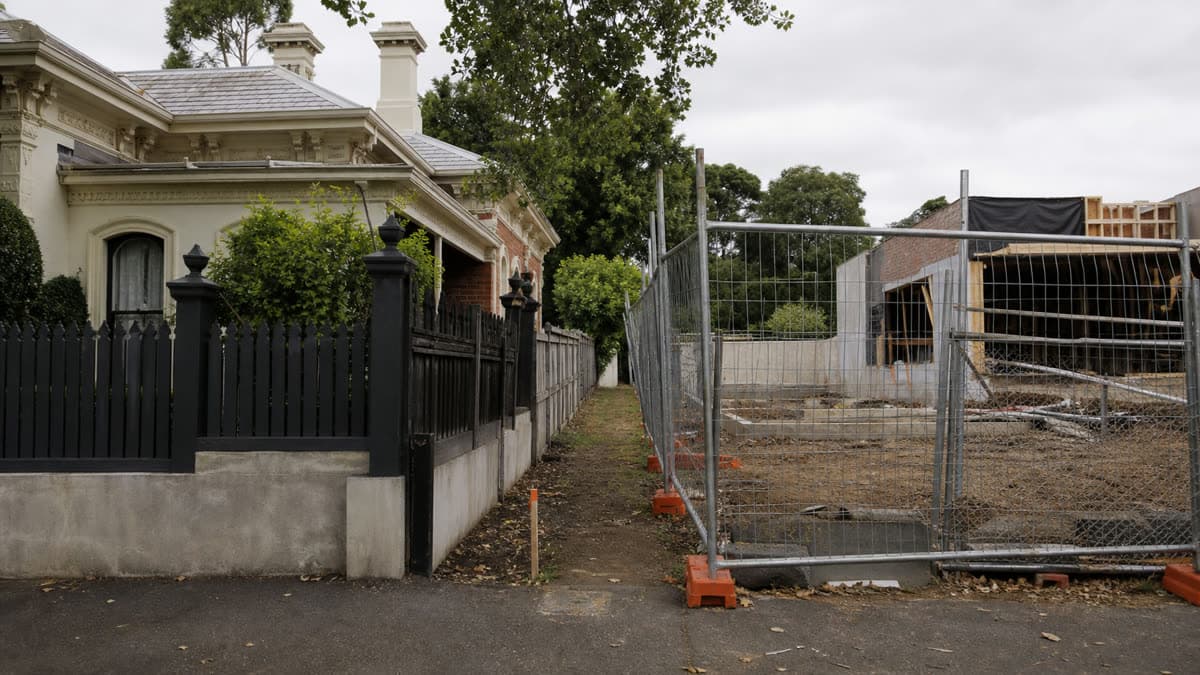
 Photo: SiteLogic editorial image
Planning Law
Section 173 agreements: what they bind, and how to remove one
A section 173 agreement can bind land long after the owner who signed it has sold up. How these agreements are made, what they can require, and the routes available to amend or end one.
A section 173 agreement is one of the few planning instruments that survives the permit it came with. A permit can be acted on and then forgotten. An agreement made under section 173 of the Planning and Environment Act 1987 sits on the title and keeps applying to whoever owns the land next, long after the original applicant has sold up and moved on. For a developer buying a site, that makes the agreement a due diligence item in its own right, separate from the permit history and separate from the planning scheme controls.
The provision
Section 173 gives a responsible authority, and in some circumstances the Minister for Planning, the power to enter into an agreement with an owner, and certain other parties with an interest in the land, about the use or development of that land. It is a contract made under statute, and that statutory basis is what gives it its unusual reach. Once registered, the obligations in it move beyond a personal promise between the council and the person who signed. They become obligations that attach to the land itself.
Agreements of this kind are used for a wide range of purposes: staging conditions on a broader precinct, contributions towards infrastructure or open space, restrictions on further subdivision, requirements to build and maintain shared assets, or conditions that could not sit comfortably inside a standard permit condition because they need to bind future owners as well as the current one. The Planning Victoria guidance sets out the practical process councils and applicants are expected to follow when negotiating and registering one.
What applies
Because the agreement is designed to run with the land, it is typically registered so that it appears on the title, or is otherwise noted against it. On any site with a development history, a purchaser's solicitor should always be checking for a section 173 agreement behind the title, and confirming what it actually requires, alongside the usual review of current zoning and overlays.
The content of an agreement can be broad. It might restrict the number of dwellings that can ever be built, tie a lot to a shared driveway or drainage arrangement with neighbouring lots, require a financial contribution before a further stage proceeds, or lock in a use restriction that has nothing to do with the current zoning at all. None of that is visible from a planning scheme search alone. It is only visible from the title and the agreement document itself.
For a developer, the practical risk is that these agreements are easy to miss if due diligence stops at the permit register and the zone map. An agreement negotiated a decade earlier by a different owner, for a different stage of a different subdivision, can still constrain what the current owner is allowed to do with the land today.
How to model it
Treat any registered section 173 agreement the way you would treat an easement or a restrictive covenant: as an encumbrance that has to be read in full before the site is priced, not summarised from a title search alone. The agreement itself, not the covenant search result, is the primary source, and it should be obtained and read clause by clause.
Where an agreement imposes a financial contribution, a staging sequence, or a restriction on yield, that constraint belongs in the feasibility as a line item or a design constraint, not as a footnote. A contribution obligation that only crystallises at a later stage of a broader development can still affect the economics of an earlier stage, particularly if the current owner is only acquiring part of the land the original agreement covers.
Where the agreement restricts subdivision or use in a way that conflicts with the acquisition strategy, that conflict needs to be resolved, or at least priced, before exchange. An agreement cannot simply be ignored because it predates the current planning scheme or because the current use looks like it might not comply with it.
Routes to amend or end an agreement
The Act anticipates that agreements will sometimes need to change. In broad terms, an agreement can be ended or varied where the responsible authority and the relevant current parties agree to do so, which usually means negotiating a fresh agreement or a deed of variation with the council, or with the Minister if the Minister was originally a party. Where agreement cannot be reached by negotiation, the Act also provides a pathway to seek a formal order ending or amending the agreement, which is an application process rather than a negotiation, and not a quick or guaranteed one.
Either route takes time, and neither should be assumed as a formality. A council that accepted a contribution or a staging restriction in exchange for an earlier approval has little commercial incentive to release that obligation just because a new owner finds it inconvenient. Any acquisition that depends on removing or varying an existing agreement should treat that step as a conditional, sequenced part of the deal, not as due diligence noise to be resolved after settlement.
What to check before exchange
Search the title as well as the planning scheme for any registered agreement affecting the land. Obtain the full agreement document itself, rather than a summary, and read every operative clause, including any that reference a wider precinct or staging plan the current lot forms part of.
Confirm whether obligations under the agreement have already been satisfied, are ongoing, or are still to crystallise, and get that confirmation from the responsible authority in writing rather than relying on the vendor's account. Check whether the agreement was made with the council alone or also involves the Minister, since that affects who has to agree to any variation.
Once the site is under contract, treat the agreement as a live compliance matter rather than a settled historical fact. Confirm who is responsible for reporting on or renewing any ongoing obligation after settlement, and build any recurring contribution, maintenance or reporting requirement into the ongoing holding cost of the project rather than only the acquisition cost.
Where the deal depends on varying or ending the agreement, build that dependency into the contract as a condition, with a realistic timeframe attached, rather than treating it as background risk. A section 173 agreement rarely stops a good site from being developed. It does mean the development has to be modelled against what the title actually allows, not against what the zone map suggests.
Published by the SiteLogic Editorial desk. Every fact traces to a primary source. See our standards and corrections register.
Fact-checked: 19 July 2026 · Review by: 19 July 2027
Sources: legislation.vic.gov.au · planning.vic.gov.au
Was this useful? Try the tool this post is based on:
Pro on SiteLogic. Logi: up to 60 messages a day. Logi also stops at US$15 of model cost in a Melbourne calendar month. The Developer Comms Kit and unlimited saved projects. The Strategy Lab simulator runs without Pro. Saving a scenario needs a signed-in account. $60/month or $600/year, ex GST. First 3 months are $30/month, ex GST, on monthly Pro.