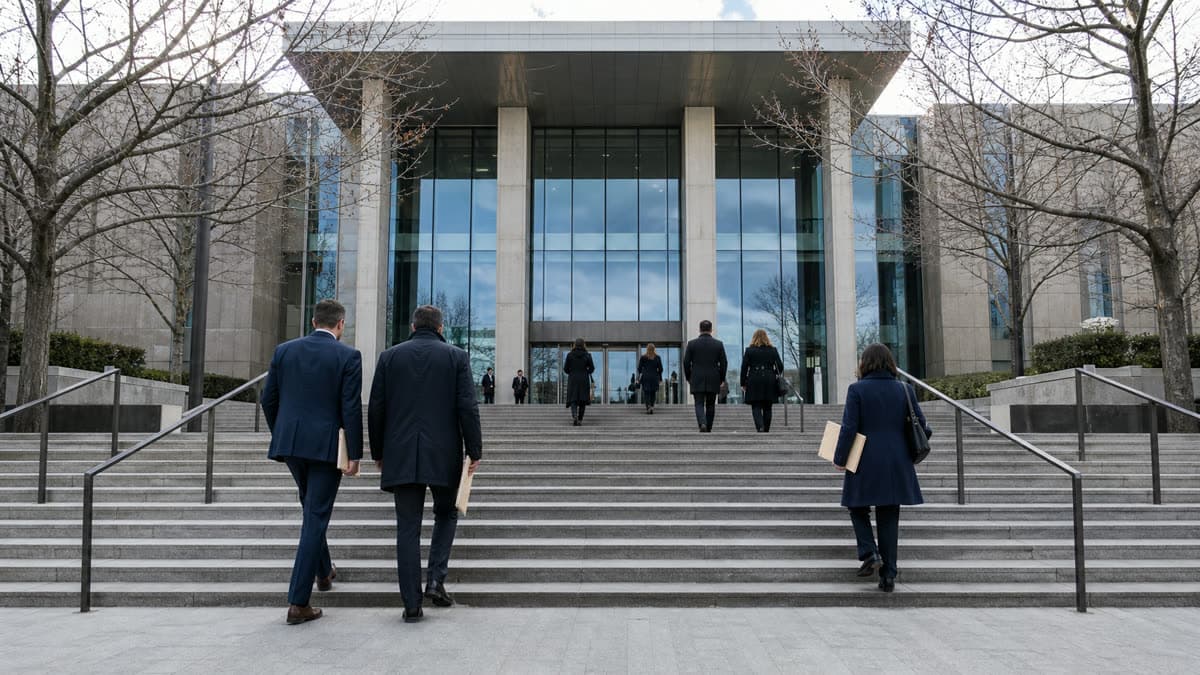
 Photo: SiteLogic editorial image
VCAT
How a VCAT planning review runs: section 79 explained
Section 79 of the Planning and Environment Act 1987 gives an applicant a right of review where a council has not decided a permit application in time. This piece walks the review from lodgement to hearing and where the evidence case is actually won or lost.
An applicant for a planning permit in Victoria does not have to wait indefinitely for a council to make a decision. The Planning and Environment Act 1987 gives an applicant a right to apply to the Victorian Civil and Administrative Tribunal for a review where the responsible authority has not decided the application within the period the Act prescribes for that step. Section 79 is the provision that lets a stalled application move forward without the applicant remaining hostage to a council's internal timetable.
For a developer, that review right is a programming tool as much as a legal one. Understanding how it runs, from the decision to lodge through to a tribunal hearing, is part of managing a site's holding cost and finance clock, and it matters even when relations with a planning department have stayed cooperative.
The provision
Section 79 sits within the review provisions of the Planning and Environment Act 1987. Its function is to treat an unreasonable silence from a responsible authority as something an applicant can act on, rather than something the applicant simply has to absorb. Where a council has not issued a decision on a permit application within the period the Act sets for that stage of the process, the applicant gains standing to ask VCAT to step into the responsible authority's shoes and determine the application itself.
This sits alongside the more familiar right of review against an actual refusal or against permit conditions the applicant does not accept. The two rights are not the same trigger. One responds to a decision the council has made and the applicant disagrees with. Section 79 responds to the absence of a decision. Because the exact period that must elapse before the right of review under section 79 arises is set out in the Act and can be affected by extensions of time, requests for further information and other procedural steps, the current period should always be confirmed against the Planning and Environment Act 1987 itself rather than assumed from memory or from a previous project.
What applies
Once the review right arises, the applicant, not the council, controls the timing of the next step. The applicant can choose to lodge an application for review with VCAT, or can choose to keep negotiating with the planning department instead. Lodging is not compulsory. Many applicants use the section 79 right as pressure to prompt a decision rather than as a step they actually intend to see through to a hearing.
If the application for review is lodged, VCAT's planning and environment list takes carriage of the matter. The tribunal does not simply ask whether the council was slow. It stands in the position of the responsible authority and must consider the application afresh, on its planning merits, against the same planning scheme provisions the council would have applied. That is the central feature of the Victorian model: VCAT's planning jurisdiction is a merits review, not a review confined to procedural fairness or legal error.
Who decides, and on what basis, is set out in the tribunal's own description of its planning and environment jurisdiction, which explains the range of matters it can hear and how the process generally runs. It is worth reading directly rather than relying on secondhand summaries, because the VCAT planning and environment list page is updated as the tribunal's practice changes.
How the review runs, from lodgement to hearing
The practical sequence an applicant can expect, once an application for review is lodged, generally follows a pattern common to VCAT's planning list.
First, the application is registered and the tribunal notifies the responsible authority and any other parties with standing, which can include objectors where the underlying application attracted third-party notice. Second, the matter is usually listed for an early procedural step, often a directions hearing or a compulsory conference, where the tribunal and the parties identify what is actually in dispute, what expert evidence will be needed, and what timetable the matter should follow.
Third, the parties prepare and exchange statements of grounds, expert witness statements and any plans or supporting material the case relies on. This is the stage where the applicant's case is actually built. A section 79 review is not an opportunity to resubmit the same drawings and hope the tribunal is more sympathetic than the council was. It is a fresh merits assessment, and it rewards a party that has used the intervening time to strengthen the technical case, whether that is traffic, urban design, heritage, amenity or another contested issue.
Fourth, if the matter is not resolved by agreement, mediation or a council decision issued in the meantime, it proceeds to a hearing before a tribunal member, or in more complex matters a panel. The hearing tests the evidence, including any expert witnesses called by each side, against the relevant planning scheme provisions and any applicable policy.
Finally, the tribunal makes an order. It can direct that a permit issue, on the original terms or with conditions the tribunal considers appropriate, or it can refuse the application. That order stands in place of whatever decision the council would otherwise have made.
Where the evidence case is won or lost
The single biggest determinant of outcome in a merits review is the strength of the technical evidence measured against the planning scheme, not the fact that the council was slow to decide. A section 79 review does not create a presumption in the applicant's favour. The tribunal is not punishing the council for delay. It is deciding the application on its merits as if it were the responsible authority.
That means the practical work of the review happens well before the hearing date. Expert reports need to directly address the decision guidelines and policies that would have applied to the council's own assessment. Where a proposal has a genuine weakness, for example an unresolved overshadowing, traffic or heritage issue, using the review purely as a delay tactic without addressing that weakness tends to produce the same result the council was heading towards anyway, just later and at higher cost.
Because outcomes turn on the specific planning scheme, site context and evidence in each matter, this article describes how the process runs rather than predicting how any individual case will be decided. Anyone assessing the prospects of a live review, or deciding whether to lodge one, should get advice from a planning lawyer or town planner who can assess the specific scheme provisions and evidence in play.
What to check before you lodge
Before treating a section 79 review as the next step, confirm the current prescribed period for the right to arise, since procedural steps such as requests for further information can affect when the clock actually starts. Confirm whether the underlying application had third-party notice, because objectors may have standing to join the review and can add both time and complexity. Identify the one or two issues that are actually driving the council's inaction, since a review lodged without addressing the substantive planning concern rarely produces a better result than continued negotiation. Finally, treat the tribunal's own timetable, not the original council decision date, as the new governing date for finance and construction programming, and build contingency around it rather than assuming the review will simply return the original expected outcome sooner.
Published by the SiteLogic Editorial desk. Every fact traces to a primary source. See our standards and corrections register.
Fact-checked: 19 July 2026 · Review by: 19 July 2027
Sources: legislation.vic.gov.au · vcat.vic.gov.au
Was this useful? Try the tool this post is based on:
Pro on SiteLogic. Logi: up to 60 messages a day. Logi also stops at US$15 of model cost in a Melbourne calendar month. The Developer Comms Kit and unlimited saved projects. The Strategy Lab simulator runs without Pro. Saving a scenario needs a signed-in account. $60/month or $600/year, ex GST. First 3 months are $30/month, ex GST, on monthly Pro.