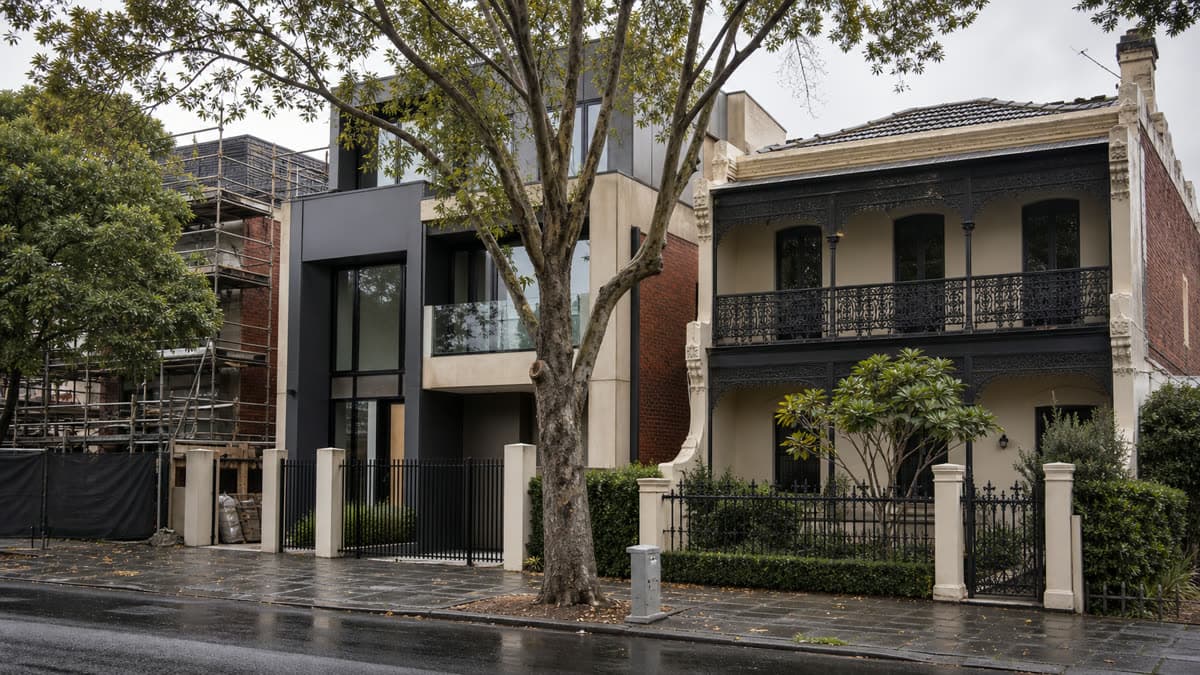
 Photo: SiteLogic editorial image
Heritage
Heritage overlay as feasibility risk: state vs local
Comparison of state and local heritage controls under Victorian planning schemes and their effect on development feasibility.
Introduction
Heritage overlays create specific constraints for Victorian development sites. Buyers, developers and advisers need to distinguish between state and local listings because each carries different permit pathways and assessment standards. This article examines the practical differences using the supplied primary sources and outlines steps for modelling risk in feasibility studies.
What changed
Recent updates to the Victorian Planning Provisions have clarified the relationship between Clause 43.01 and separate state heritage legislation. The planning scheme portal shows that Clause 43.01 now directs applicants to consider both local heritage overlays and any applicable state heritage listing. Where a site carries both controls, the stricter requirements usually prevail. The Heritage Victoria pages on state listings and local overlays confirm that dual controls are common in inner metropolitan municipalities.
State versus local overlays
State heritage listing applies to places of significance to Victoria as a whole. Assessment occurs under the Heritage Act and involves Heritage Victoria as the primary decision maker. Local heritage overlays are introduced through planning schemes by individual councils. They protect places of local significance and are administered through the responsible authority under the Planning and Environment Act.
The distinction matters for timing. State listings require a separate permit from Heritage Victoria before a planning permit can be granted. Local overlays are assessed as part of the planning permit process. In some cases a planning permit may be issued subject to Heritage Victoria consent, extending overall approval timeframes.
What applies
Clause 43.01 of the Victoria Planning Provisions sets out the requirements for heritage overlays. The ordinance requires a permit for demolition, construction, external alterations and subdivision. Decision guidelines direct the responsible authority to consider the heritage significance of the place and any applicable heritage study or conservation management plan.
Where a state heritage listing also applies, the Heritage Act imposes additional controls. These include requirements for permits for works that affect the registered place. The supplied Heritage Victoria sources indicate that state-registered places must meet higher thresholds for alteration or demolition.
How to model it
Feasibility models should incorporate separate risk allowances for each control type. For a site subject only to a local overlay, allowance should be made for extended planning permit processing and possible conditions requiring retention of fabric or design modifications. For sites with state listing, additional time and cost for a separate Heritage Victoria permit should be included.
Cost modelling requires identification of any conservation management plan or heritage citation that applies. These documents often specify acceptable interventions and prohibited works. Where no current plan exists, allowance for preparation of such a document may be necessary.
Holding cost estimates should reflect the sequential nature of approvals. A state listing typically adds a minimum of three to six months to the approval pathway. Local overlays may add two to four months depending on council processing times and the extent of third-party objections.
Feasibility implications
Heritage controls affect site yield, construction cost and exit valuation. Retention requirements can reduce developable floor area. Materials and detailing that match existing fabric increase construction budgets. Purchasers of heritage-affected sites should test multiple yield scenarios that reflect different levels of intervention.
Buyers should also consider the likelihood of VCAT review. Heritage decisions are frequently appealed, particularly where demolition is refused. Appeal risk should be factored into the contingency line of any feasibility study.
What to check before exchange
Prior to contract exchange the following items should be verified against the supplied primary sources:
- Confirm whether the site is included in the Victorian Heritage Register via the state listing page.
- Review the planning scheme map and ordinance for any local heritage overlay using the planning schemes portal.
- Obtain the heritage citation or statement of significance for each applicable control.
- Check for any current permit applications or enforcement proceedings related to heritage matters.
- Assess whether a conservation management plan has been prepared and whether it has been endorsed by the relevant authority.
Where both state and local controls apply, legal advice on the interaction between the two regimes is recommended. The order of approvals and any conditions precedent should be documented in the contract.
Practical steps for advisers
Architects and town planners preparing applications should prepare separate heritage impact statements for each control. The statement for a state listing must address the criteria in the Heritage Act while the local overlay statement responds to Clause 43.01 decision guidelines.
Builders should price works on the basis of the most restrictive consent. Where state consent is required, tender documents should note that works cannot commence until both permits are obtained.
Developers reviewing sites with heritage overlays should request copies of any previous permit decisions or VCAT determinations. These provide precedent on acceptable levels of change for comparable places.
Conclusion
Heritage overlays remain a material feasibility variable in Victorian property transactions. Distinguishing state from local controls allows more accurate scheduling and costing. The primary sources listed provide the baseline information required for initial screening. Project-specific advice from heritage consultants and legal advisers is necessary before final commitment.
Fact-checked: 19 June 2026 · Review by: 19 June 2027
Sources: heritage.vic.gov.au · planning.vic.gov.au · heritage.vic.gov.au · planning-schemes.app.planning.vic.gov.au
Was this useful? Try the tool this post is based on:
Pro on SiteLogic. Logi: up to 60 messages a day. Logi also stops at US$15 of model cost in a Melbourne calendar month. The Developer Comms Kit and unlimited saved projects. The Strategy Lab simulator runs without Pro. Saving a scenario needs a signed-in account. $60/month or $600/year, ex GST. First 3 months are $30/month, ex GST, on monthly Pro.