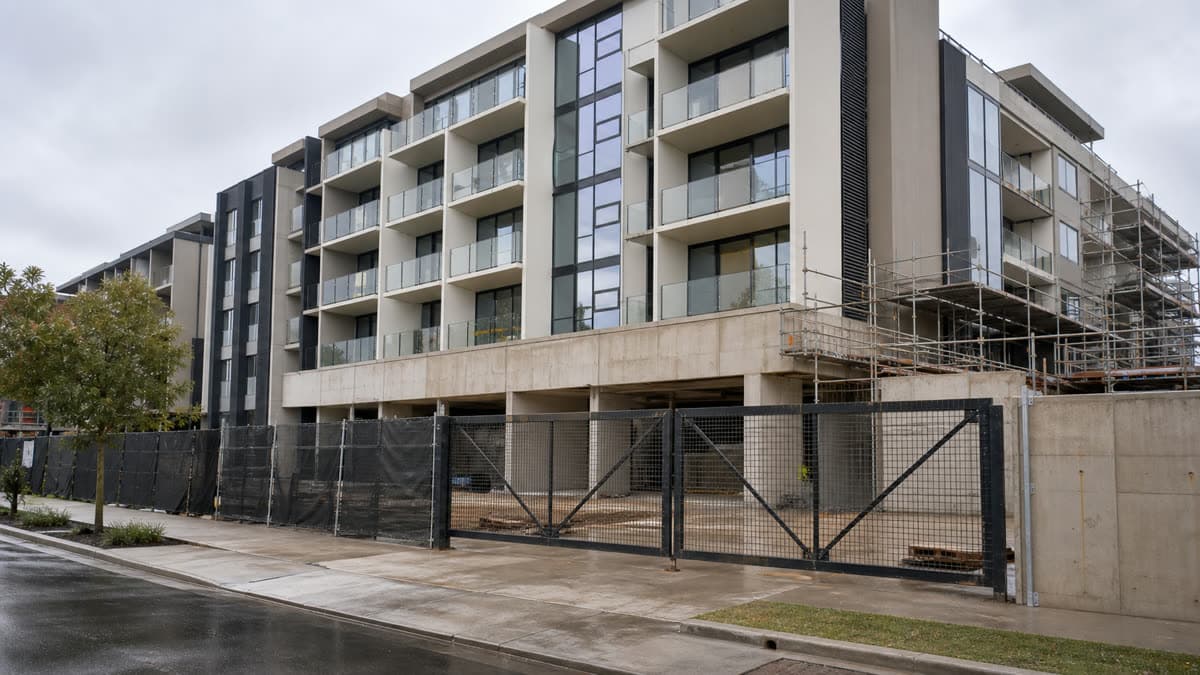
 Photo: SiteLogic editorial image
Developer Bond
The Developer Bond Scheme: 2% scenario cash drag under legal review
Scenario analysis for a 2% Victorian developer bond assumption. Timing, trigger and hold period are not yet confirmed and require legal verification.
Editor's note, 11 July 2026: This article previously stated a mid-2025 capture date and a six-year hold period. SiteLogic's in-repo sources do not contain quoted primary-source text resolving the legal commencement date, trigger event, hold period, release conditions or exact threshold wording. Those claims are not yet confirmed and require verification. See the source-dated reference block.
Most feasibility spreadsheets have a contingency line, a finance line, and a GST/margin scheme line. What they often do not have is a developer bond scenario. That omission can distort working-capital planning.
The Building Legislation Amendment (Buyer Protections) Act 2025 is cited in this repo as introducing a security bond for Class 2 buildings in Victoria. The exact commencement, trigger and threshold are not yet confirmed. Verification against quoted source text is still needed.
The feasibility logic is separate from the unresolved legal detail: if a bond principal is locked out of your project, the cost is the return you cannot earn on that capital while it is unavailable.
What the bond actually requires
For scenario modelling, use a bond equal to 2% of the total construction cost and test different hold periods. The legal lodgement point, hold period and release conditions are not yet confirmed in the current repo. Verify before relying on them.
This is not modelled as a levy. The scenario separates principal from opportunity cost so the cashflow effect and the economic drag stay visible.
The worked example
Take a 30-unit apartment project. Construction contract: $12 million. Scenario bond principal at 2%: $240,000.
At a developer hurdle rate of 7%, each assumed year of lock-up costs:
$240,000 × 7% = $16,800 per year
A two-year scenario is $33,600. A six-year stress case is $100,800. The legally correct hold period is not yet confirmed. Sensitivity testing is safer than one hard-coded legal default. Verify before relying on any single figure.
⚠ On a tight-margin project, this matters
A 30-unit apartment development with a 15% development margin on cost is working with roughly $5.1 million of profit before tax. A six-year stress-case bond drag of $100,800 is still material when margins are already under pressure from construction cost escalation and ICP levies.
Where this sits in the cost stack
The bond sits between your construction cost and your settlement proceeds, but it is not captured by either. Construction cost lines reflect what you pay the builder. Finance lines reflect your drawn-down debt. The bond is a third category: capital you may control but cannot deploy.
The interaction with existing line items is worth noting. The developer bond should not be treated as a replacement for other insurance, warranty or rectification settings unless legal advice confirms that interaction for the project.
Three changes to make in your feasibility now
First, add the opportunity cost as a dedicated line item. Not in contingency. Not buried in finance. Compute it: 2% of your construction contract, multiplied by your hurdle rate, multiplied by a tested hold-period scenario.
Second, model the principal as a cash outflow in the candidate trigger month. The legal trigger is not yet confirmed. Verify the trigger before relying on it. The cashflow pressure point still belongs in the model.
Third, confirm with your bond provider and legal adviser before relying on any timing assumption. Treat the trigger as a critical-path risk until it is verified for the project.
How SiteLogic models it
The Pro feasibility calculator now includes the developer bond as an explicit line item for Class 2 project scenarios. The exact legal threshold is not yet confirmed and needs verification. When you switch the scenario on, the calculator:
- Computes the bond principal at 2% of entered construction cost
- Applies your project hurdle rate over the scenario hold period to generate the opportunity cost figure
- Adds both to the cost stack with separate line items, so the principal and the drag are visible independently
The logic matters. A developer who adds 2% to construction cost and calls it the bond cost may double-count if the principal is later released. A developer who ignores it entirely may leave a real cost off the model. The safer treatment is the opportunity cost, with the principal modelled as a cashflow timing event.
Lachlan Voss covers the full feasibility framework, including the line items most spreadsheets ignore, in his book, The Victorian Property Developer. The bond regime is a recent addition to what is already a heavy cost stack for Victorian apartment development. Getting the model right is not optional.
Published by the SiteLogic Editorial desk. Every fact traces to a primary source. See our standards and corrections register.
Fact-checked: 14 April 2026 · Review by: 1 January 2027
Sources: Building Legislation Amendment (Buyer Protections) Act 2025 · Victorian Building Authority guidance · Building Act 1993 (Vic) Part 13A
Corrections:
- 2026-07-11: Mid-2025 commencement, six-year hold, lodgement timing and threshold claims marked for verification after contradiction review found insufficient quoted primary-source text in the repo.
Was this useful? Try the tool this post is based on:
Pro on SiteLogic. Logi: up to 60 messages a day. Logi also stops at US$15 of model cost in a Melbourne calendar month. The Developer Comms Kit and unlimited saved projects. The Strategy Lab simulator runs without Pro. Saving a scenario needs a signed-in account. $60/month or $600/year, ex GST. First 3 months are $30/month, ex GST, on monthly Pro.