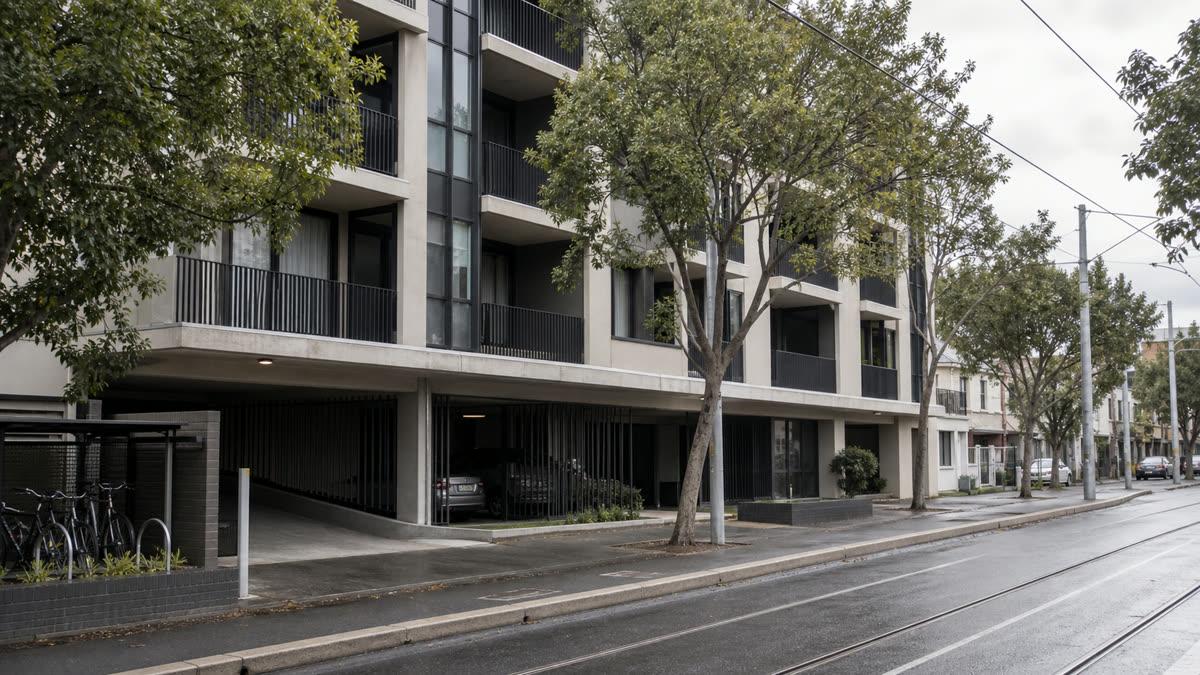
 Photo: SiteLogic editorial image
planning
Clause 52.06 car parking reductions when fewer spaces are a real assumption
An examination of VPP Clause 52.06 provisions for reduced car parking requirements in Victorian developments with reference to decision guidelines and scheme histories.
What changed
The Victorian Planning Provisions set out requirements for car parking under Clause 52.06. Recent updates to the clause appear in the histories maintained on the planning schemes portal. These updates adjust how reductions are considered for certain land uses and locations. The supplied sources point to the current ordinance text for Hume and the VC271 amendment history. Practitioners review these to confirm the exact wording that applies at the time of an application.
The decision guidelines within Clause 52.06 remain central. They direct responsible authorities to consider factors such as the availability of public transport, the intensity of the proposed use and any existing parking arrangements on the site. Changes in the clause have clarified the scope for reductions where on-street parking or shared facilities can be demonstrated.
What applies
Clause 52.06 applies to most new developments and changes of use across Victoria. The base rates are listed in the table to the clause. Reductions below those rates are possible through a permit application. The decision guidelines provide the framework for assessment.
Key considerations include the proximity to activity centres and the adequacy of alternative transport options. The ordinance text for individual councils such as Hume incorporates the state-wide provisions with any local variations noted in schedules. Applicants must address each relevant guideline when seeking a reduction.
The history of amendments shows incremental refinements rather than wholesale replacement of the clause. Version references in the portal allow users to compare the text before and after VC271. This comparison assists in understanding how the decision guidelines have been applied in practice.
How to model it
Feasibility modelling for a project begins with the base parking requirement from the table in Clause 52.06. The next step is to identify opportunities for reduction by reference to the decision guidelines. Data on public transport frequency and walking distances to stops can be compiled from council or state sources.
A reduction request typically includes a traffic impact assessment. This assessment quantifies expected demand and compares it against the proposed supply. Where the site is near a train station or frequent bus route the case for fewer spaces strengthens. Shared parking arrangements with neighbouring properties may also be modelled if agreements are in place.
The allowance for reduced parking needs project-specific costing. Professional input from a traffic engineer is required to prepare the supporting material. The model should test sensitivity to different reduction percentages to show the range of outcomes.
What to check before exchange
Before contracts are exchanged the planning permit status must be confirmed. Any permit that relies on a Clause 52.06 reduction should be examined for conditions that limit future changes of use. The permit may require ongoing management plans or contributions to public parking improvements.
Title searches should reveal any covenants or agreements that affect parking rights. Overlay controls may impose additional requirements that interact with Clause 52.06. Checking the current version of the ordinance through the planning schemes portal ensures the application was assessed against the correct text.
Council records of similar approvals in the same zone provide context. These records indicate how the decision guidelines have been interpreted locally. Early engagement with the responsible authority can clarify whether a reduction is likely to be supported.
Practical steps for applicants
Prepare a written submission that directly addresses each decision guideline. Include maps showing transport routes and photographs of existing parking conditions. Where reductions are substantial a peer review of the traffic assessment may be warranted.
Maintain records of all correspondence with council officers. These records assist in demonstrating that the reduction was considered on its merits. If the application is refused the guidelines provide the basis for any review at the Victorian Civil and Administrative Tribunal.
Interaction with other clauses
Clause 52.06 does not operate in isolation. It must be read alongside zone provisions and any applicable overlays. For example heritage overlays may restrict modifications to existing buildings that would otherwise allow additional parking. Design and development overlays may set maximum parking caps that align with or exceed the reductions sought under Clause 52.06.
The combination of controls determines the overall development envelope. Early identification of all relevant clauses prevents later redesign. The planning schemes portal allows users to view the full set of controls that apply to a particular address.
Record keeping and review
After a permit is granted the conditions attached to any parking reduction should be monitored. Some permits require annual reporting on parking usage. Failure to comply can lead to enforcement action.
Periodic review of the clause text is advisable because amendments continue to occur. The histories section of the portal provides a reliable reference point for past versions. This reference supports consistent advice to clients across multiple projects.
The approach outlined above relies on the ordinance text and decision guidelines as the primary reference points. Each project requires tailored analysis that reflects its specific location and proposed use.
Fact-checked: 19 June 2026 · Review by: 19 June 2027
Sources: planning-schemes.app.planning.vic.gov.au · planning-schemes.app.planning.vic.gov.au
Was this useful? Try the tool this post is based on:
Pro on SiteLogic. Logi: up to 60 messages a day. Logi also stops at US$15 of model cost in a Melbourne calendar month. The Developer Comms Kit and unlimited saved projects. The Strategy Lab simulator runs without Pro. Saving a scenario needs a signed-in account. $60/month or $600/year, ex GST. First 3 months are $30/month, ex GST, on monthly Pro.