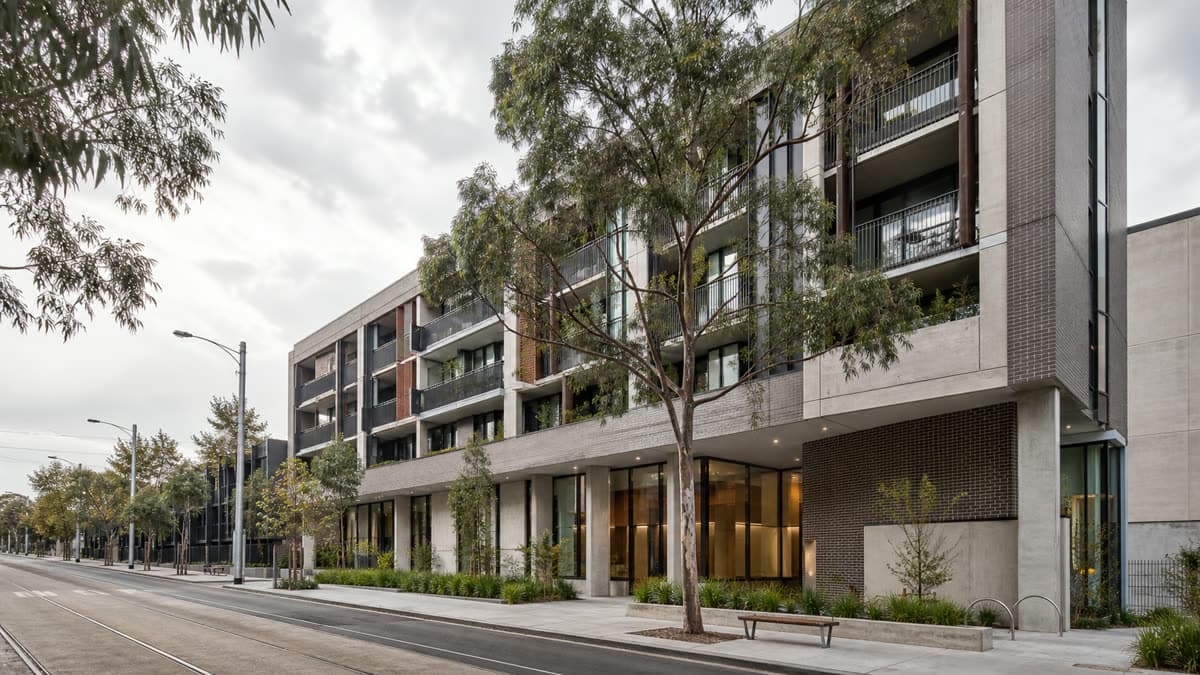
 Photo: SiteLogic editorial image
Tax
Build-to-rent: the land tax and duty concessions
How Victoria's build-to-rent land tax discount and duty settings change the hold-versus-sell maths for completed apartment stock, and the eligibility tests that gate them.
What the concessions are designed to do
Victoria built dedicated land tax and duty settings for build-to-rent (BTR) developments to change the economics of holding, rather than selling, completed apartment stock. Standard land tax and duty settings assume the ordinary development cycle: acquire, build, sell, with duty and land tax priced around a comparatively short hold. Long-term rental housing does not fit that cycle. The developer plans to hold completed dwellings as rental stock for years, absorbing land tax annually with no sale proceeds in the near term to offset it. The BTR concessions exist to make the hold-and-lease model viable at scale, rather than structurally disadvantaged against selling down.
What applies
Two settings sit alongside each other for eligible BTR developments: a land tax concession that discounts the taxable value attributed to eligible BTR land, and duty settings that affect how the underlying land is treated for eligible projects. Eligibility is not automatic. The SRO's build-to-rent page sets out the specific tests a development must meet, including the minimum number of dwellings in the development, a requirement that the dwellings be held under a unified ownership and management structure for a minimum commitment period, and requirements around the tenancy terms offered to renters. Miss one of these tests and the concession is unavailable for that land, regardless of how the project is marketed.
The concession operates against the Land Tax Act 2005 settings for eligible BTR land and is assessed year by year. A development must continue to satisfy the eligibility tests for each tax year the discount is claimed, not only at the point construction completes. If the development stops meeting the tests, for example because individual dwellings are strata titled and sold off before the minimum commitment period ends, the concession can be lost and, in some circumstances, clawed back.
How to model it: the hold-versus-sell maths
The feasibility question the BTR concessions change is whether a completed building is worth more sold as individual lots or held and leased as a single rental asset. The land tax treatment of a large, wholly held rental building has historically made the hold side of that comparison worse than the sell side, because land tax is assessed on the whole landholding without the threshold relief a subdivided, individually owned stock would attract. The BTR land tax discount narrows that gap by reducing the taxable value attributed to eligible BTR land for the years the concession applies.
To model this properly:
- Run two parallel cash flow scenarios for the completed building: strata sale, with individual settlements and standard duty and land tax exposure per lot, against BTR hold, with single ownership eligible for the concession and ongoing rental income net of holding costs.
- In the hold scenario, apply the land tax reduction only for years the development is confirmed to meet the eligibility tests, and model a step back to the standard rate for any year that might fall outside the minimum commitment period.
- Treat the concession as a discount to a rate you look up at the time of modelling, not a fixed percentage baked permanently into the spreadsheet. The SRO periodically reviews these settings, so reference the current published rate rather than a historical one.
- Include the duty position on the underlying land acquisition and any subsequent dealing, since BTR-specific settings can affect how that is assessed for eligible projects, separately from the land tax discount.
What to check before committing to a BTR structure
Because eligibility is tested annually and depends on how the building is actually operated rather than how it is marketed, confirm the following before committing capital to a BTR play:
- Read the current eligibility tests on the SRO's build-to-rent page in full, rather than working from a general description of what BTR gets. The dwelling count, ownership structure, and tenancy offering requirements are what separates a qualifying project from a non-qualifying one.
- Confirm the minimum commitment period the concession requires, and stress-test whether the intended hold period comfortably exceeds it, allowing for an early sale under changed market conditions.
- Get written advice on what happens to the concession, and any clawback exposure, if part of the development is later strata titled and sold rather than held.
- Confirm how the concession interacts with the entity structure used to hold the asset, corporate, trust, or a wrapped fund structure, since land tax surcharges for trusts and absentee owners can still apply on top of, or instead of, the BTR settings depending on the ownership vehicle.
- Model the sensitivity of the hold-versus-sell decision to a change in the concession itself. Because these settings are legislated and can be adjusted, do not treat the current discount as a permanent feature of a feasibility spanning a twenty-year hold.
Interaction with other controls
The BTR land tax discount sits alongside, not instead of, the general land tax rate stack. The absentee owner surcharge and the trust surcharge can still apply to BTR land held through an ineligible or foreign-interested structure, since the discount reduces the taxable value calculation rather than removing these other layers. Duty treatment on the initial acquisition of the site can also differ depending on whether the ultimate ownership structure is settled before or after exchange, which brings sub-sale and nomination questions back into play if the BTR entity is not finalised early.
Illustrative example
The following figures are illustrative. They demonstrate the method and will vary by site, council and timing. Take a completed 200-dwelling BTR building with an aggregated unimproved land value of $40,000,000. Under standard land tax settings with no concession, the annual bill on that value sits at the top of the marginal rate scale for the whole balance. Applying a discount to the taxable value, rather than to the tax itself, reduces the base the tax is calculated against rather than the rate applied to it. Over a ten-year hold, that mechanism produces a materially lower cumulative land tax bill than the same building would face assessed at full taxable value throughout, often enough to close some or all of the historical gap between the hold and sell outcomes. Confirm the actual discount percentage and the current land tax rate scale on the SRO and Land Tax Act pages before applying this to a live site; the example demonstrates why the taxable-value mechanism matters, not a dollar figure to reuse.
Record keeping and review
Because eligibility is assessed year by year, keep an annual eligibility file: dwelling count, tenancy offering terms, and ownership structure, matched against the SRO's published tests for that tax year. If a future SRO review questions the concession, this is the evidence set that supports the claim. Review it at each land tax assessment date, not only at financial close.
Published by the SiteLogic Editorial desk. Every fact traces to a primary source. See our standards and corrections register.
Fact-checked: 19 July 2026 · Review by: 19 July 2027
Sources: sro.vic.gov.au · legislation.vic.gov.au
Was this useful? Try the tool this post is based on:
Pro on SiteLogic. Logi: up to 60 messages a day. Logi also stops at US$15 of model cost in a Melbourne calendar month. The Developer Comms Kit and unlimited saved projects. The Strategy Lab simulator runs without Pro. Saving a scenario needs a signed-in account. $60/month or $600/year, ex GST. First 3 months are $30/month, ex GST, on monthly Pro.