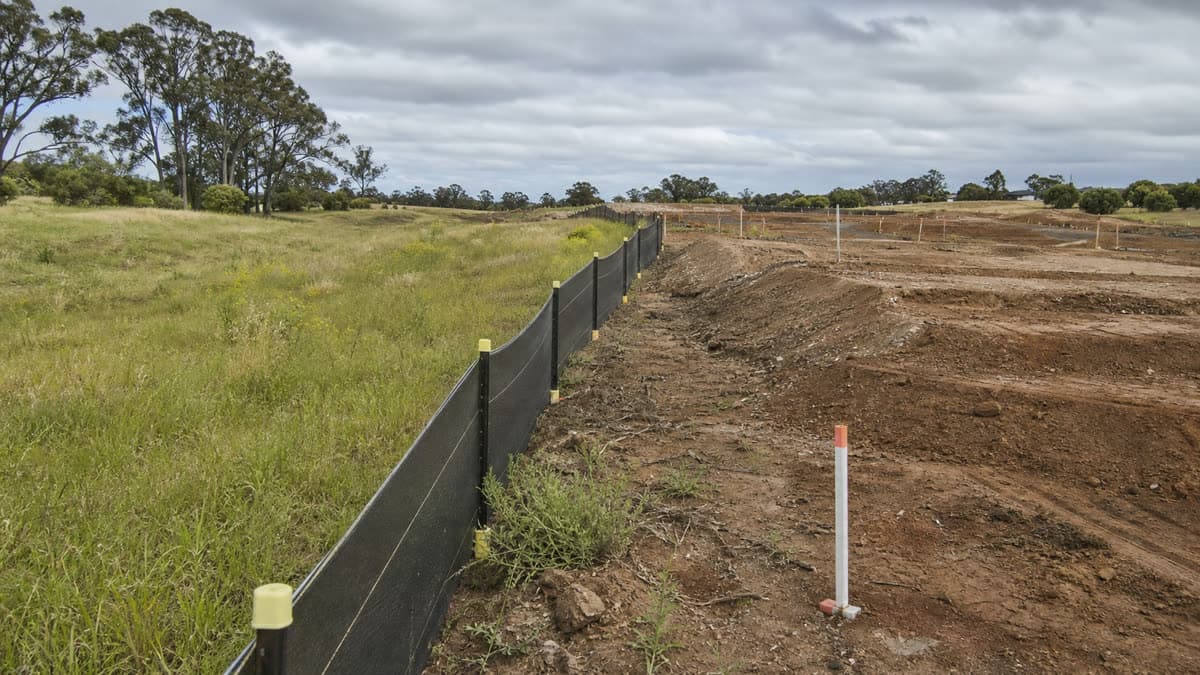
 Photo: SiteLogic editorial image
Aboriginal Cultural Heritage
Aboriginal Cultural Heritage Management Plans: cost, trigger zones, and permit timing
In Victoria, CHMP risk turns on a specific statutory test: high impact activity, an area of cultural heritage sensitivity, and an approved plan before the permit can issue. Here is what developers need to check before exchange.
Aboriginal Cultural Heritage Management Plans are one of the most commonly misunderstood due diligence items on Victorian development sites. Some feasibility models ignore the issue entirely. Others treat the ACHRIS map as if it automatically decides whether a project can proceed. Both approaches are wrong.
The CHMP trigger is more specific. Under the Aboriginal Heritage framework, the critical question is whether the proposed activity is a high impact activity in an area of cultural heritage sensitivity. If both parts are satisfied, the planning permit cannot issue until a CHMP has been approved. That makes the CHMP question a permit-timing and holding-cost issue, not just a compliance note.
What triggers a CHMP
First Peoples - State Relations explains the test in two parts. A CHMP is required when a high impact activity is proposed in an area of cultural heritage sensitivity. The same guidance states that planning permits, licences and work authorities cannot be issued for that activity unless the CHMP has been approved.
The two parts need to be read together. Cultural heritage sensitivity alone does not mean every project requires a CHMP. A high impact activity outside a sensitive area does not necessarily trigger the requirement. The commercial risk appears where the proposed activity and the sensitive area overlap.
For residential developers, the dwelling and lot count is often the first practical screen. First Peoples - State Relations identifies construction of three or more dwellings and subdivision of three or more lots as examples of high impact activity. That means a two-townhouse proposal and a three-townhouse proposal can have different cultural heritage consequences on the same site.
This is why the CHMP question belongs at acquisition stage. A scheme that looks viable at three dwellings may need to be tested again if the third dwelling moves the project into a CHMP pathway.
Where the trigger zones come from
Areas of cultural heritage sensitivity are defined by the Aboriginal Heritage Regulations 2018. The State guidance identifies categories including registered Aboriginal cultural heritage places, waterways, ancient lakes, Ramsar wetlands, coastal land, dunes and sand sheets.
ACHRIS is the practical starting point for checking those areas. It is not the whole legal test. First Peoples - State Relations warns that the mapping is indicative and may not show the full extent of areas defined by the Regulations.
The correct approach is to use ACHRIS as a screening tool, then read the mapped result against the proposed activity area and the relevant regulatory category. A map layer should trigger a more precise assessment. It should not be treated as either automatic refusal or automatic clearance.
Exempt activities
The Regulations also contain exempt activity categories. The State guidance lists examples that matter to smaller residential projects: one or two dwellings, small subdivisions, buildings and works ancillary to a dwelling, minor works, demolition and emergency works.
Those exemptions can materially affect feasibility. A two-dwelling proposal on sensitive land may be outside the mandatory CHMP pathway where the exemption applies. A three-dwelling proposal on the same land may need a different assessment.
The important point is that the exemption is not a design shortcut. It is a legal classification exercise. If the project relies on being exempt, that position should be confirmed before the yield is treated as settled.
Significant ground disturbance
Many infill sites have already been built on, serviced, paved, demolished or excavated. That prior disturbance can matter. First Peoples - State Relations says a CHMP is generally not required if all of the area of cultural heritage sensitivity has already been subject to significant ground disturbance.
There are two limits to that conclusion.
First, significant ground disturbance is not mapped by First Peoples - State Relations. ACHRIS may show sensitivity, but it does not tell you whether previous works satisfy the regulatory disturbance test. That question requires evidence.
Second, the disturbance exception does not apply to an Aboriginal place itself. If the land contains a registered Aboriginal place and the proposed activity is high impact, the guidance says a CHMP is required even where the area has been disturbed.
The practical implication is that prior development is not enough on its own. If significant ground disturbance is the basis for avoiding a CHMP, the supporting material needs to be assembled: historical aerials, approved plans, service records, excavation records and site history.
What the process adds
The CHMP process is not just another consultant report attached to a planning application. It has its own sequence.
The published process starts with the sponsor engaging a Heritage Advisor. Before preparation begins, a Notice of Intent is submitted through ACHRIS with the required information and prescribed fees. Notice is also given to the relevant Registered Aboriginal Party, the Secretary, landowners or occupiers in the CHMP area, and any municipal council whose district includes land to which the plan relates.
The RAP has 14 days to respond to the Notice of Intent. If it chooses not to evaluate the plan, or does not respond within that period, the Secretary becomes the decision-maker.
The assessment may include desktop, standard and complex stages. Every CHMP includes a desktop assessment. Further assessment may be required if the desktop work shows Aboriginal cultural heritage may be present.
Once the CHMP is submitted, the evaluating authority determines it within 30 days. That period pauses if missing or additional information is requested, and restarts when the information has been received.
For a developer, the important point is the dependency. Where a CHMP is mandatory, the planning permit cannot issue until the CHMP is approved. That can move the project program before council has even reached the ordinary planning merits.
How to model the cost
The official guidance does not support a single CHMP allowance. First Peoples - State Relations says fees are paid to the Heritage Advisor and to the organisation evaluating the CHMP: the relevant RAP, or First Peoples - State Relations where no RAP has been appointed.
Other costs are negotiated between the parties and depend on the nature of the work, location, remoteness, timeframes, activity area, number of RAP representatives, industry standards and market value of labour.
The statutory fee component is calculated by multiplying the fee units specified in the Regulations by the current fee-unit value, then rounding as required. That is the predictable part. The less predictable part is the professional and participation cost generated by the assessment pathway.
For feasibility purposes, the correct treatment is to model CHMP exposure as a separate line item where the trigger appears likely. It should not be hidden inside consultant contingency. The cost and time profile of a desktop-only exercise on a compact infill site is different from a complex assessment over a larger activity area.
What to check before exchange
Before the contract becomes unconditional, run the CHMP question in the same sequence every time.
First, check the activity area on ACHRIS and record the result. Treat the map as a screening layer, not a final answer.
Second, test the proposed activity against the Aboriginal Heritage Regulations 2018 and the State guidance. Count dwellings, lots, buildings and works by reference to the activity area, not only the title boundary.
Third, identify whether an exemption may apply. If the project depends on the exemption, confirm the basis before the design is treated as bankable.
Fourth, if significant ground disturbance is relevant, collect the evidence early. Prior development should be documented, not assumed.
Fifth, identify the relevant RAP or decision-maker and allow for the Notice of Intent and assessment sequence in the project program.
The feasibility consequence is straightforward. A CHMP does not necessarily make a site unviable. An unpriced CHMP can. Where the trigger appears likely, the model should carry a named allowance for professional cost, statutory fees and program time before the land price is finalised.
Published by the SiteLogic Editorial desk. Every fact traces to a primary source. See our standards and corrections register.
Fact-checked: 8 June 2026 · Review by: 8 June 2027
Sources: First Peoples - State Relations - Cultural Heritage Management Plans · First Peoples - State Relations - Cultural heritage sensitivity · First Peoples - State Relations - How to consider cultural heritage in your proposed development or project · First Peoples - State Relations - Cultural heritage management plan process · First Peoples - State Relations - Cultural Heritage Management Plan information for Sponsors · First Peoples - State Relations - Fees and penalties under the Aboriginal Heritage Act 2006 · First Peoples - State Relations - Heritage advisors · Aboriginal Heritage Regulations 2018 (Vic)
Was this useful? Try the tool this post is based on:
Pro on SiteLogic. Logi: up to 60 messages a day. Logi also stops at US$15 of model cost in a Melbourne calendar month. The Developer Comms Kit and unlimited saved projects. The Strategy Lab simulator runs without Pro. Saving a scenario needs a signed-in account. $60/month or $600/year, ex GST. First 3 months are $30/month, ex GST, on monthly Pro.